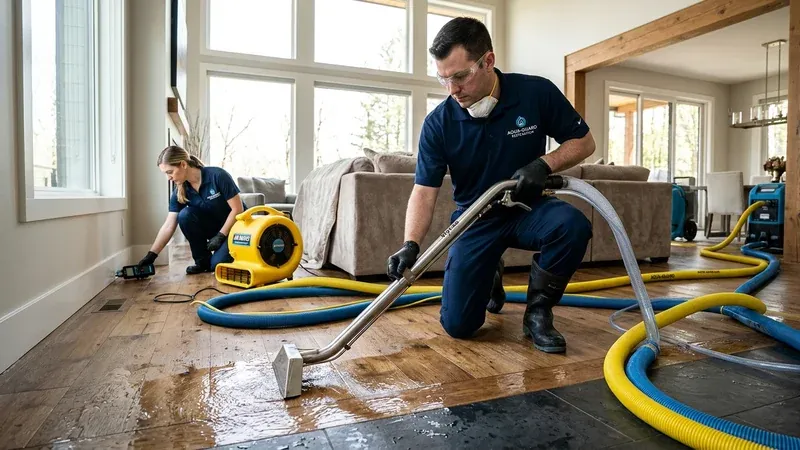
The Science of Water Damage Classification
Professional water damage restoration is governed by strict scientific principles outlined in the Institute of Inspection, Cleaning and Restoration Certification (IICRC) S500 Standard for Professional Water Damage Restoration. Restoration specialists classify every water loss across two primary dimensions: the level of contamination (Categories 1 through 3) and the expected rate of evaporation based on the materials affected (Classes 1 through 4).
The Three Categories of Water Contamination
Water contamination levels dictate whether building materials can be sanitized and dried in place or must be completely removed under biohazard containment protocols:
- Category 1: Clean Water – Originates from a sanitary source, such as a broken domestic supply line, sink overflow without contaminants, or melting ice. If addressed within 24 to 48 hours, drywall and carpeting can frequently be dried and salvaged.
- Category 2: Grey Water – Contains significant chemical or biological contamination with potential to cause discomfort or sickness. Examples include dishwasher discharge, washing machine overflows, or sump pump failures without sewage. Carpet padding must generally be replaced.
- Category 3: Black Water – Grossly unsanitary water laden with pathogenic agents, heavy coliform bacteria, raw sewage, or storm river runoff. Contact poses severe health hazards. Porous materials like carpets and drywall must be completely removed under full technician personal protective equipment (PPE).
The Four Classes of Structural Evaporation
While categories describe contamination, classes describe the physical volume of water absorbed by structural components and the dehumidifier capacity required for structural stabilization:
- Class 1: Slow Evaporation Rate – Intrusion affects only a small portion of a room or involves low-permeance materials like concrete, tile, or dense plywood with minimal carpet saturation.
- Class 2: Fast Evaporation Rate – Water has permeated an entire room, saturating carpets and cushions while wicking twelve to twenty-four inches up porous drywall surfaces.
- Class 3: Fastest Evaporation Rate – Water has cascaded overhead from broken ceiling pipes or roof failures, saturating ceilings, wall insulation, structural studs, and subfloors across multiple levels.
- Class 4: Specialty Drying Situations – Deeply bound moisture trapped within low-porosity materials such as hardwood gym floors, plaster walls, solid masonry, or crawlspace sub-slabs requiring high-heat desiccant dehumidification.
Why Precise Classification Protects Your Health and Property
Misdiagnosing Category 2 or 3 water as clean water can expose occupants to dangerous airborne pathogens and hidden fungal contamination. Professional mitigation ensures proper containment, targeted air scrubbing, and calibrated psychrometric drying tailored to the exact category and class of your property loss.
Experiencing an Active Water Emergency?
Do not let water sit in your home or business. Call our nationwide dispatch desk to coordinate emergency water extraction and structural drying.
Call (855) 563-0161