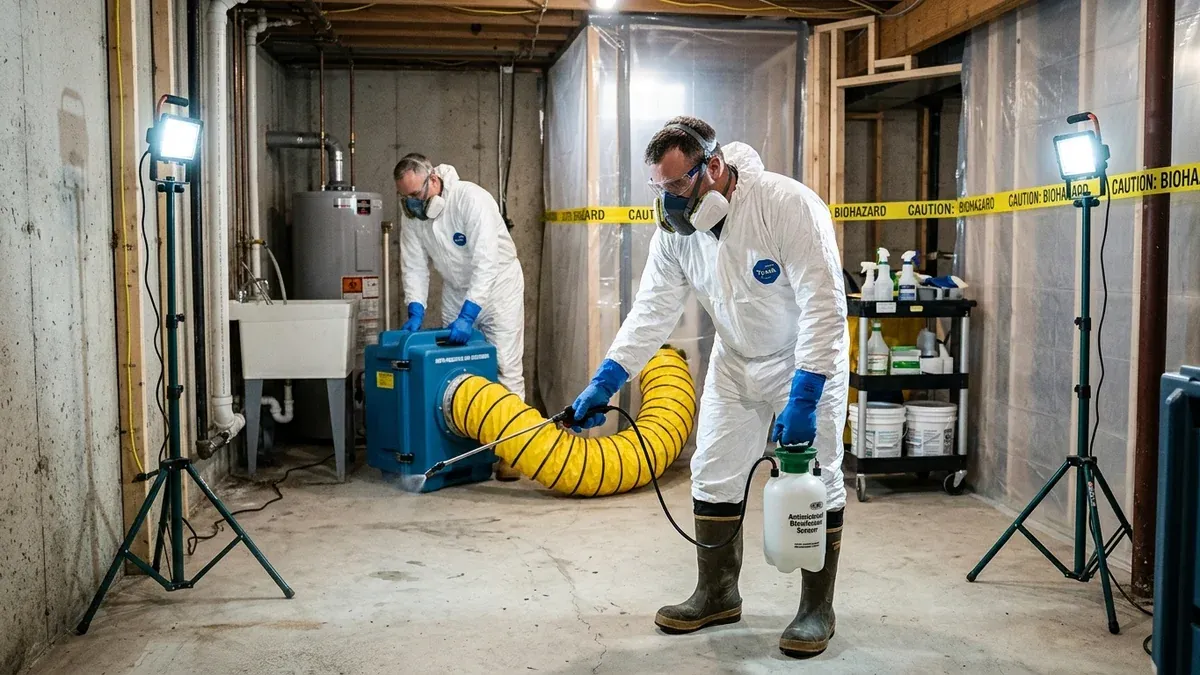
Sewer backups represent the most hazardous type of water emergency, carrying dangerous bacteria, viruses, and foul odors into your home. Raw sewage requires specialized containment and protective equipment to clean safely. We connect you with experienced restoration specialists who extract liquid waste, safely remove contaminated carpet and drywall, disinfect all affected surfaces with EPA-registered sanitizers, and run industrial air scrubbers to eliminate odors completely.
Technical Standards
Safe, Thorough Cleanup for Sewer Backups
Sewer backups bring dangerous bacteria, foul odors, and contaminated water into your living space. Trained cleanup crews safely extract the waste, remove contaminated materials, disinfect all affected surfaces, and eliminate odors completely.
✓Certified biohazard containment establishing critical negative air pressure
✓Full technician PPE including respirators, biohazard suits, and nitrile barriers
✓Safe extraction, bagging, and licensed disposal of raw sewage waste
✓Multi-step chemical disinfection utilizing hospital-grade virucides
✓Thermal fogging and hydroxyl generation eliminating deep offensive odors
Standard Restoration Workflow
1
Area Isolation and PPE Preparation
Sealing doorways with plastic sheeting, setting negative air scrubbers, and donning protective suits.
2
Black Water Extraction and Waste Removal
Pumping liquid sewage directly into approved municipal waste lines and bagging solid matter.
3
Contaminated Porous Material Removal
Cutting out and safely disposing of saturated carpets, pad, baseboards, and drywall.
4
Bio-Wash, Sanitization, and Deodorization
Scrubbing framing with EPA-approved biocides followed by thermal deodorization treatments.
Frequently Asked Questions Regarding Sewage Cleanup and Biohazard Sanitization
Sewage contains billions of active microorganisms including hepatitis A, E. coli, Giardia, and rotavirus. Contact or inhalation of bio-aerosols can cause severe gastrointestinal illness, skin infections, and respiratory failure.
No. Industry standard IICRC S500 guidelines strictly mandate that porous materials such as carpets, carpet padding, and upholstered furniture that come into contact with Category 3 black water must be discarded.
Common causes include tree root intrusion into lateral lines, heavy storm surges overwhelming municipal combined sewer infrastructure, or blockages caused by fats, oils, and non-flushable wipes.
After all contaminated materials are removed and surfaces are scrubbed with biocides, technicians use industrial hydroxyl generators and thermal foggers that chemically neutralize volatile organic compounds at the molecular level.
Negative air machines pull contaminated indoor air through sealed HEPA filters and vent it outdoors, creating low air pressure in the work zone so foul odors and microbes cannot escape into unaffected living areas.
Standard homeowner insurance rarely includes sewer backup coverage automatically. It is usually added as an inexpensive policy rider or endorsement known as Water Backup and Sump Overflow coverage.
Keep everyone away from the area, turn off HVAC systems to prevent spreading airborne bio-contaminants through ductwork, avoid touching contaminated items, and call our emergency dispatch desk immediately.
Technicians conduct ATP (adenosine triphosphate) surface testing and visual inspections to verify that biological activity has been eliminated to hospital sanitation standards before reconstruction.
Emergency Water Help
Sewage Cleanup and Biohazard Sanitization
Speak with our dispatch desk to connect with an available independent restoration contractor for moisture inspection, water extraction, and structural drying.
Call our emergency dispatch desk to connect with an independent local contractor for sewage cleanup and biohazard sanitization and straightforward project estimates.